Burnout Expertise

Decades of frontline clinical experience and peer-reviewed research shape every tool in the Burnout Recovery Kit.
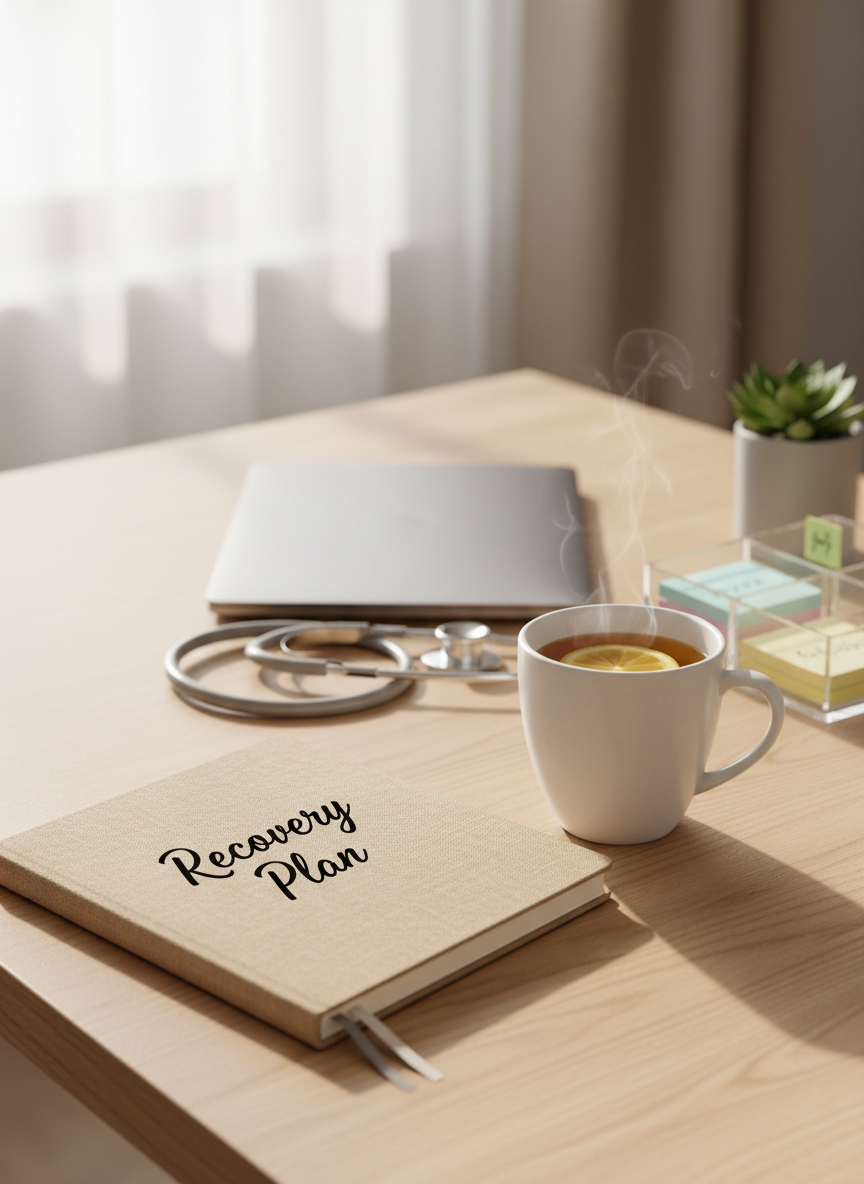
A neatly arranged burnout recovery workspace featuring an open linen-textured notebook labeled “Recovery Plan” beside a smooth, matte white ceramic mug of herbal tea on a light oak desk. A soft grey stethoscope is coiled neatly near a closed silver laptop, with pastel sticky notes organized in a small tray. Gentle morning daylight filters through an out-of-focus window, creating soft highlights on the mug’s rim and subtle shadows under the objects. Shot at eye level with a shallow depth of field, the foreground in crisp focus and the background softly blurred. The atmosphere is calm, professional, and hopeful, with a clean, modern, photographic realism style that conveys clarity and structured support for clinician burnout recovery.
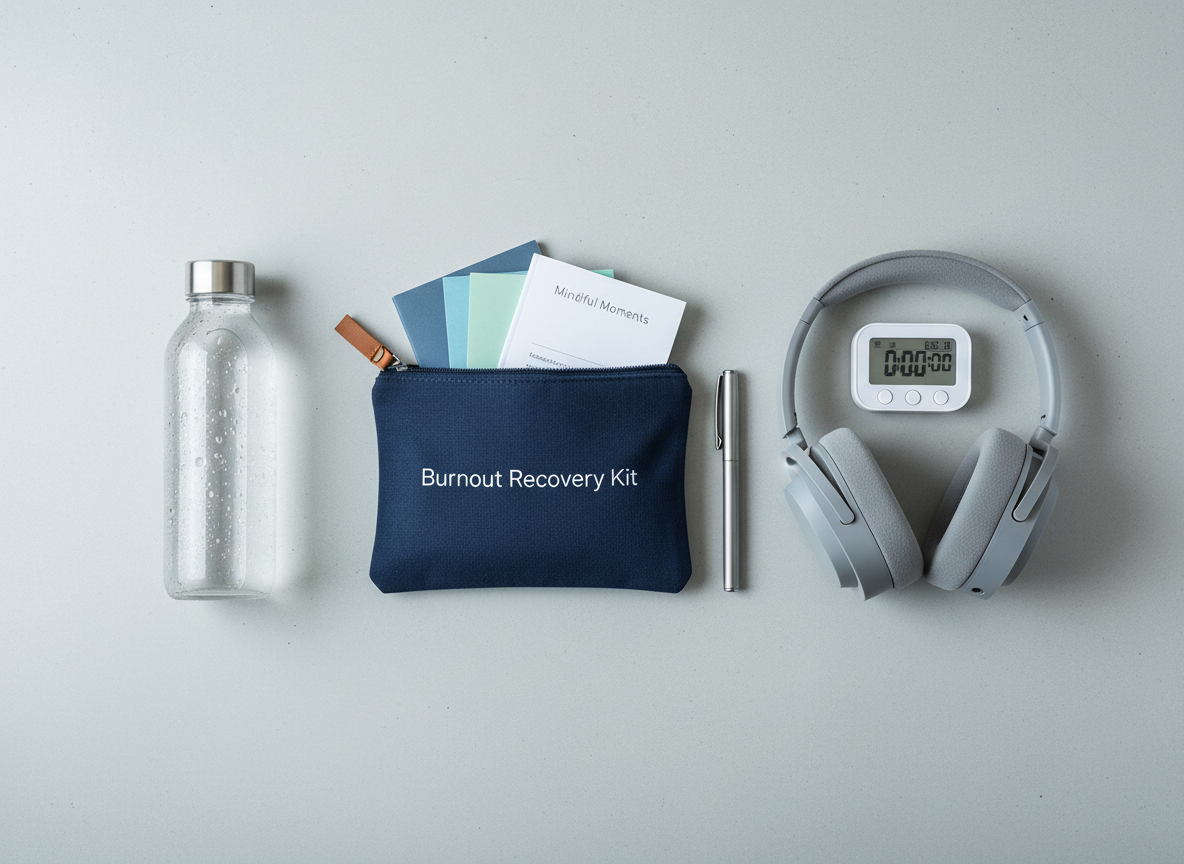
A carefully curated burnout recovery toolkit laid out on a smooth, pale concrete surface: a navy-blue fabric pouch labeled “Burnout Recovery Kit” partially unzipped, revealing color-coded index cards, a slim mindfulness booklet, and a metal pen with a brushed finish. Nearby, a small digital timer, a pair of soft grey noise-canceling headphones, and a frosted glass water bottle with condensation beads. Overhead, cool, diffused studio lighting creates even illumination with gentle, precise shadows that emphasize texture. Shot from a top-down, flat lay perspective, with each item spaced thoughtfully for visual clarity. The mood is organized, pragmatic, and reassuring, rendered in a clean, modern, photographic realism style tailored to clinicians who need structured, practical tools to manage and recover from burnout.

Evidence-Based Support For Clinicians

Clinician Burnout Recovery delivers practical, science-backed tools that fit real-world schedules, helping you move from exhaustion to sustainable engagement. Explore our structured Burnout Recovery Kit Program to rebuild energy, meaning, and control over your work.

Clinical Team
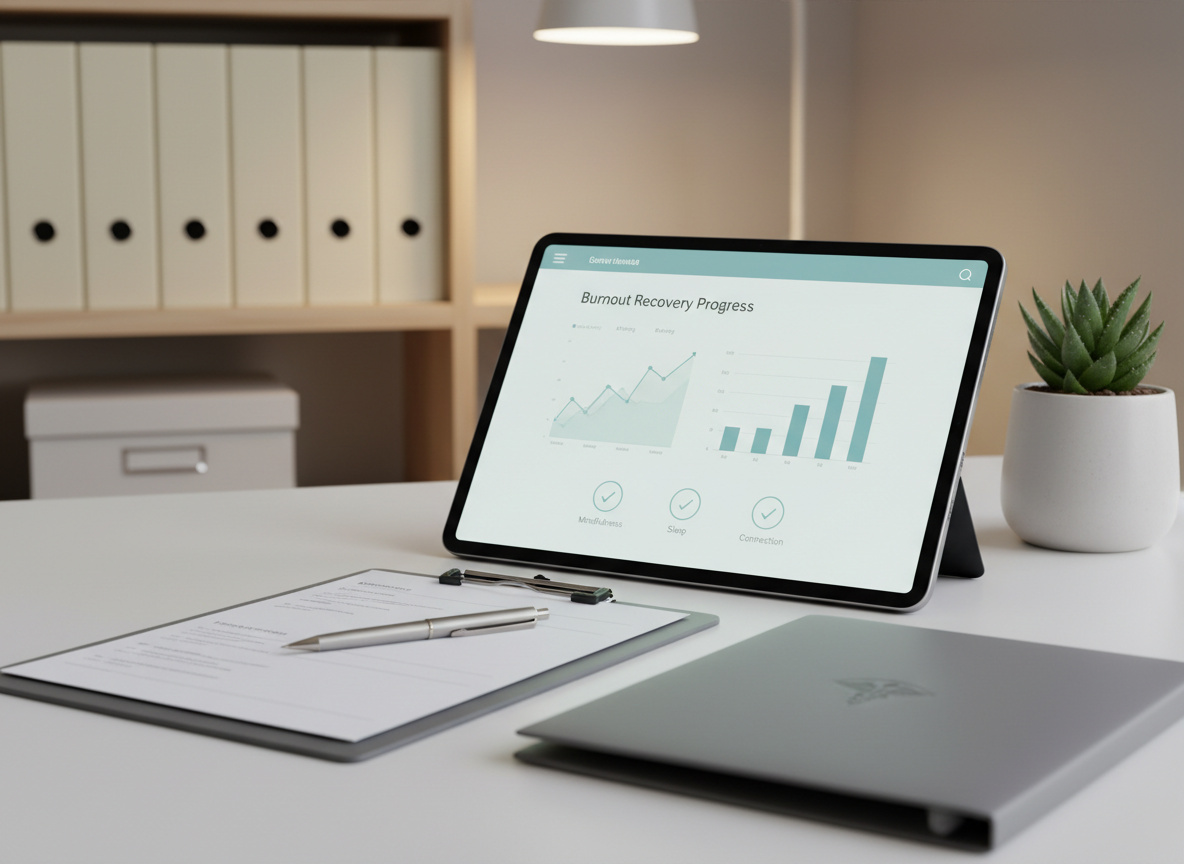
A professional clinician’s desk set up for reflection and recovery, featuring a large, softly glowing tablet screen displaying a clean dashboard titled “Burnout Recovery Progress” with simple graphs and calming blue-green accents. Next to it, a stack of crisp, white assessment forms clipped on a slate clipboard, a fine-tip pen, and a closed folder embossed with a subtle medical caduceus. In the background, a tidy row of reference binders and a single low-maintenance plant in a matte white pot. Cool, even overhead lighting combined with a gentle desk lamp creates balanced, shadow-soft illumination. Captured at a three-quarter angle with moderate depth of field, keeping all key elements in focus. The atmosphere is analytical yet supportive, clean and modern, emphasizing professional structure in clinician burnout recovery documentation.

Aarav Sharma

CEO

Board-certified psychiatrist leading research-backed burnout recovery programs for physicians and advanced practice clinicians.
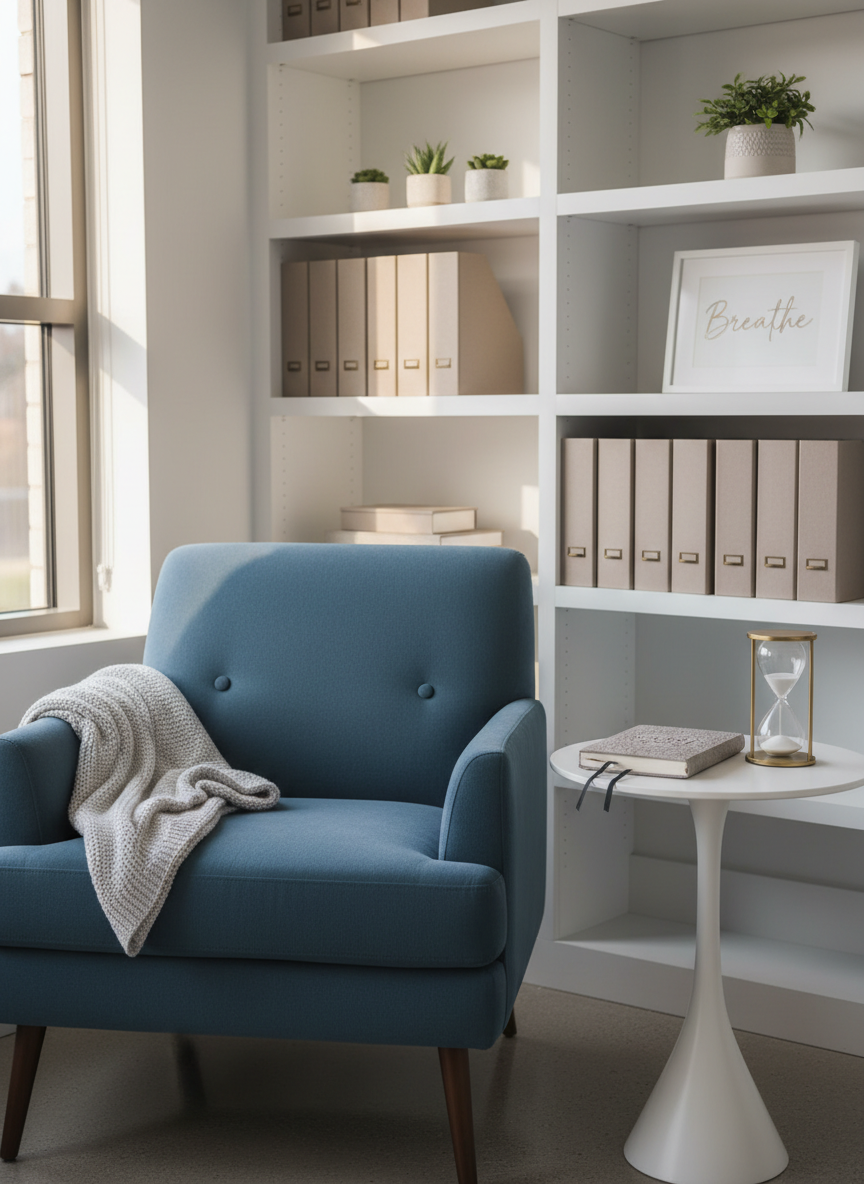
A serene clinician break room corner designed for burnout recovery, with a plush, slate-blue armchair and a folded light grey blanket draped over the arm. A small white side table holds a closed, embossed journal titled “Rest & Reset” and a sleek sand hourglass mid-flow. Behind, minimalist white bookshelves display neatly arranged binders, plant pots, and a subtle framed print reading “Breathe” in understated typography. Soft, diffused afternoon light enters from the left, creating a gentle glow and delicate shadows. Captured from a slightly elevated angle with balanced composition and moderate depth of field. The overall mood is restorative and professional, with a clean, modern, enhanced photographic style emphasizing calm, order, and sustainable recovery from clinician burnout.

Mateo García

CTO

Former ICU nurse and resilience coach specializing in moral injury, compassion fatigue, and shift-work recovery.

A neatly arranged burnout recovery workspace featuring an open linen-textured notebook labeled “Recovery Plan” beside a smooth, matte white ceramic mug of herbal tea on a light oak desk. A soft grey stethoscope is coiled neatly near a closed silver laptop, with pastel sticky notes organized in a small tray. Gentle morning daylight filters through an out-of-focus window, creating soft highlights on the mug’s rim and subtle shadows under the objects. Shot at eye level with a shallow depth of field, the foreground in crisp focus and the background softly blurred. The atmosphere is calm, professional, and hopeful, with a clean, modern, photographic realism style that conveys clarity and structured support for clinician burnout recovery.

Zuri Ndlovu

Engineer

Organizational psychologist partnering with health systems to redesign workflows, staffing, and culture to prevent burnout.

A carefully curated burnout recovery toolkit laid out on a smooth, pale concrete surface: a navy-blue fabric pouch labeled “Burnout Recovery Kit” partially unzipped, revealing color-coded index cards, a slim mindfulness booklet, and a metal pen with a brushed finish. Nearby, a small digital timer, a pair of soft grey noise-canceling headphones, and a frosted glass water bottle with condensation beads. Overhead, cool, diffused studio lighting creates even illumination with gentle, precise shadows that emphasize texture. Shot from a top-down, flat lay perspective, with each item spaced thoughtfully for visual clarity. The mood is organized, pragmatic, and reassuring, rendered in a clean, modern, photographic realism style tailored to clinicians who need structured, practical tools to manage and recover from burnout.

Leila Haddad

Designer

Mindfulness-based therapist integrating brief, evidence-based practices clinicians can use between patients and overnight calls.

Guided By Compassion, Data, And Courage

We honor clinicians’ humanity, challenge unsafe norms, and design recovery strategies that protect both patient care and the people providing it.

A professional clinician’s desk set up for reflection and recovery, featuring a large, softly glowing tablet screen displaying a clean dashboard titled “Burnout Recovery Progress” with simple graphs and calming blue-green accents. Next to it, a stack of crisp, white assessment forms clipped on a slate clipboard, a fine-tip pen, and a closed folder embossed with a subtle medical caduceus. In the background, a tidy row of reference binders and a single low-maintenance plant in a matte white pot. Cool, even overhead lighting combined with a gentle desk lamp creates balanced, shadow-soft illumination. Captured at a three-quarter angle with moderate depth of field, keeping all key elements in focus. The atmosphere is analytical yet supportive, clean and modern, emphasizing professional structure in clinician burnout recovery documentation.
A serene clinician break room corner designed for burnout recovery, with a plush, slate-blue armchair and a folded light grey blanket draped over the arm. A small white side table holds a closed, embossed journal titled “Rest & Reset” and a sleek sand hourglass mid-flow. Behind, minimalist white bookshelves display neatly arranged binders, plant pots, and a subtle framed print reading “Breathe” in understated typography. Soft, diffused afternoon light enters from the left, creating a gentle glow and delicate shadows. Captured from a slightly elevated angle with balanced composition and moderate depth of field. The overall mood is restorative and professional, with a clean, modern, enhanced photographic style emphasizing calm, order, and sustainable recovery from clinician burnout.
A neatly arranged burnout recovery workspace featuring an open linen-textured notebook labeled “Recovery Plan” beside a smooth, matte white ceramic mug of herbal tea on a light oak desk. A soft grey stethoscope is coiled neatly near a closed silver laptop, with pastel sticky notes organized in a small tray. Gentle morning daylight filters through an out-of-focus window, creating soft highlights on the mug’s rim and subtle shadows under the objects. Shot at eye level with a shallow depth of field, the foreground in crisp focus and the background softly blurred. The atmosphere is calm, professional, and hopeful, with a clean, modern, photographic realism style that conveys clarity and structured support for clinician burnout recovery.